Dambulla, Sri Lanka: el templo de las cuevas doradas del Triangulo Cultural
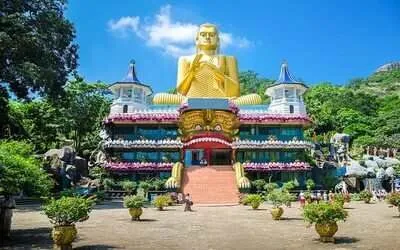
Cinco cuevas excavadas en un unico afloramiento rocoso conservan mas de 2.000 anos de culto budista ininterrumpido: 153 estatuas de Buda, techos pintados que cubren mas de 2.100 metros cuadrados y un templo activo al que los peregrinos siguen subiendo cada dia.
Mas de dos milenios de culto ininterrumpido
La leyenda cuenta que el rey Valagamba se refugio en estas cuevas en el siglo I a.C. tras ser expulsado de Anuradhapura, y prometio construir aqui un templo si recuperaba su trono. Asi lo hizo, y Dambulla ha funcionado desde entonces como un lugar de culto activo, uno de los sitios religiosos ininterrumpidos mas antiguos del sur de Asia. Reyes sucesivos anadieron estatuas, murales y santuarios a lo largo de los siglos, sobre todo durante el periodo candiano en el siglo XVIII, cuando se completo gran parte de la vivida pintura que se ve hoy. La UNESCO declaro el complejo de cuevas Patrimonio de la Humanidad en 1991.
Cinco cuevas, cinco atmosferas distintas
La Cueva 1, la «Cueva del Rey Divino», se centra en un Buda reclinado de 14 metros esculpido directamente en la roca. La Cueva 2, la mas grande y visitada, alberga 56 estatuas y pinturas en el techo que representan lado a lado episodios clave de la vida de Buda y de la historia de Sri Lanka. Las cuevas mas pequenas, 3, 4 y 5, son mas tranquilas y faciles de pasar por alto, pero recompensan una visita mas pausada con agrupaciones de estatuas mas intimas y murales en estilos claramente distintos, reflejo de diferentes siglos de patronazgo real.
Que hacer en Dambulla
La subida desde la base hasta la entrada de las cuevas dura entre 15 y 20 minutos por un camino pavimentado y escalinatas, considerablemente mas suave que en Sigiriya, con amplias vistas sobre las llanuras circundantes y, en dias claros, la propia roca de Sigiriya. Es obligatorio quitarse el calzado en la entrada y llevarlo durante las cinco cuevas, asi que una bolsa pequena ayuda. Una nueva estatua dorada de Buda, de mas de 30 metros de altura, se alza en la base cerca del museo y ofrece una parada sencilla y con aire acondicionado antes o despues de la subida, util para quienes combinan Dambulla con Sigiriya el mismo dia.
Consejos practicos para la visita
Se requiere vestimenta recatada en todo momentohombros y rodillas cubiertos— y el calzado se retira completamente en la entrada de las cuevas, asi que merece la pena llevar calcetines, ya que los suelos de piedra pueden calentarse al mediodia. La fotografia suele estar permitida, pero no con flash cerca de las estatuas. Dambulla se combina de forma natural con Sigiriya en un mismo dia, y visitar primero Dambulla por la manana, mas fresca, y despues Sigiriya una vez pasada la avalancha inicial, suele funcionar mejor que el orden inverso.
Clima en Dambulla
Igual que Sigiriya, Dambulla se encuentra en la zona seca y es comoda de visitar casi todo el ano, siendo enero a abril generalmente el periodo mas seco y caluroso. Las propias cuevas se mantienen relativamente frescas sin importar el clima exterior, ya que el saliente rocoso proporciona sombra y aislamiento naturales. Las tormentas de la tarde son mas frecuentes de octubre a diciembre; el camino pavimentado de acceso puede volverse resbaladizo, por lo que las visitas matutinas son preferibles en ese periodo.
Atracciones cercanas para combinar
La Fortaleza Rocosa de Sigiriya esta a solo veinte minutos y es, con diferencia, la combinacion mas habitual para una excursion de un dia. Kandy se encuentra a unas dos horas al sur, una siguiente parada natural para quienes se dirigen hacia las tierras altas tras el Triangulo Cultural. Las zonas de concentracion de elefantes salvajes en los parques nacionales de Minneriya y Kaudulla estan a 30-40 minutos al noreste, especialmente gratificantes de julio a octubre, cuando grandes manadas se reunen junto a las orillas de los embalses.
Donde alojarse
La propia localidad de Dambulla ofrece una mezcla practica de hoteles de gama media y casas de huespedes, comoda para salir temprano hacia las cuevas, mientras que el cercano pueblo de Habarana ofrece una base mas pintoresca con lodges en la selva y alojamientos con vista al lago, muchos orientados hacia la roca de Sigiriya en la distancia. Ambas bases funcionan bien para un itinerario por el Triangulo Cultural; Habarana suele ofrecer una estancia mas tranquila y verde a un precio similar.
Donde comer cerca de Dambulla
Los bufes de rice and curry pensados para grupos de excursion de un dia son habituales a lo largo de la carretera principal entre Dambulla y Sigiriya, practicos para un almuerzo rapido y abundante entre visitas. Varios restaurantes aqui ofrecen una seleccion de curry realmente amplia, ya que el volumen de viajeros de paso sostiene mas variedad que en poblaciones mas pequenas. Para una cena mas tranquila, los lodges de Habarana suelen servir comidas al aire libre con vistas a arrozales o pequenos lagos, un contraste agradable con las paradas de almuerzo junto a la carretera.
Combine Dambulla con Sigiriya
Nuestros tours de un dia por el Triangulo Cultural combinan el templo de las cuevas doradas con la Fortaleza Rocosa de Sigiriya y, opcionalmente, un safari de elefantes salvajes, con su chofer guia gestionando los horarios, las entradas y la logistica de ambos lugares.
Planifique su dia en DambullaWhatsAppCircuitos mejor valorados
Destinos relacionados
Guias relacionadas
Donde comer
Preguntas frecuentes
Cuanto dura la visita al templo de las cuevas de Dambulla?
La mayoria de los visitantes necesita entre 60 y 90 minutos para ver comodamente las cinco cuevas, incluida la subida desde la base. Anada tiempo extra si tambien quiere visitar la estatua dorada de Buda y el pequeno museo de la entrada.
Merece la pena Dambulla si tambien voy a ver Sigiriya?
Si: ambos lugares estan a solo veinte minutos entre si y casi siempre se visitan juntos. Dambulla ofrece un contraste mas suave y sombreado frente a la expuesta subida de Sigiriya, y juntos cubren tanto la historia religiosa como la real de la region.
Que debo ponerme para visitar el templo de las cuevas de Dambulla?
Se requiere ropa recatada que cubra hombros y rodillas, y el calzado debe retirarse en la entrada de las cuevas. Lleve calcetines si es sensible a los suelos de piedra calientes, y una bolsa pequena para llevar su calzado por las cinco cuevas.
Se puede fotografiar dentro de las cuevas?
La fotografia general suele estar permitida, pero no con flash cerca de los techos pintados y las estatuas, tanto para proteger las obras de arte como por respeto a este lugar de culto activo.
Cual es el mejor momento del dia para visitar Dambulla?
Las visitas por la manana son mas frescas y menos concurridas, especialmente util si planea continuar hacia Sigiriya el mismo dia. Los suelos de piedra de las cuevas tambien se mantienen notablemente mas frescos bajo los pies temprano en el dia.